Can Cats Eat Chicken? Best Protein for Senior Cats
Yes, cats can eat plain cooked chicken, and it is excellent protein. Learn how to prepare it safely for an older cat, how much to feed, and what to skip.
Yes, cats can eat plain cooked chicken, and it is an excellent protein. Skip the seasoning, bones, and skin. Chicken is one of the safest and most digestible human foods you can share with a cat, which makes it a great topper or treat for an aging eater.
Because cats are obligate carnivores, lean meat like chicken fits their biology well. The key is to keep it simple and remember that even great protein is not a complete diet on its own.
Easy Chicken-Based Picks for Aging Cats
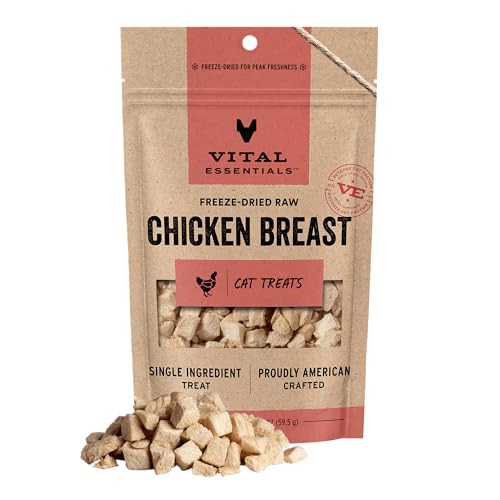
Vital Essentials Vital Essentials Freeze Dried Chicken
Single-ingredient chicken treat, just like home-cooked but shelf-stable

Fancy Feast Fancy Feast Senior 7+ Chicken Pâté
Complete senior wet food built around the chicken cats love
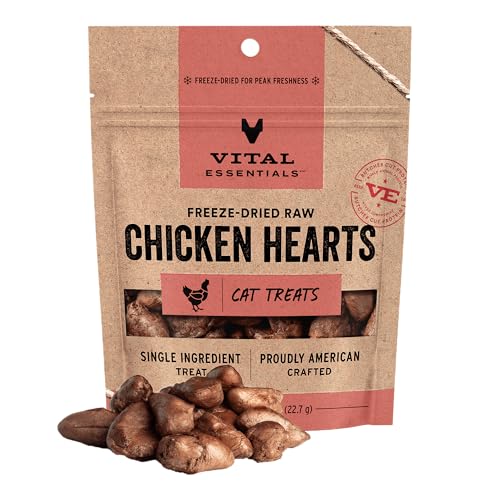
Vital Essentials Vital Essentials Chicken Hearts
High-protein freeze-dried organ treat for variety and taurine
Product picks are researched, not veterinary advice. As an Amazon Associate we earn from qualifying purchases.
Why chicken is a great choice for cats
Chicken is lean, highly digestible, and packed with the animal protein cats are built to thrive on. It delivers amino acids that support muscle, which matters for senior cats who tend to lose muscle mass with age. Most cats find it delicious, so it works well to tempt an older cat that has become picky or is recovering from illness.
How to prepare chicken safely
Plain is the rule. Follow these steps:
- Cook it fully: boil, bake, or poach with no oil, butter, or seasoning.
- Remove all bones: cooked bones splinter and can choke a cat or injure the gut.
- Skip the skin: it is fatty and can upset digestion in older cats.
- No seasonings: salt, onion, and garlic are all harmful. Onion and garlic are outright toxic.
- Serve small and cool: shred into bite-sized pieces and let it cool first.
How much chicken to feed
Treats and toppers, including chicken, should make up no more than about 10 percent of your cat's daily calories. For most cats that means a tablespoon of shredded meat a few times a week. The rest of the diet should be a complete, balanced food so your cat gets adequate taurine, calcium, and vitamins that plain chicken cannot supply.
A senior-cat note
Aging cats often lose appetite or muscle, and a little warm chicken can make meals appealing again. It is also a gentle protein for a sensitive stomach. That said, an older cat that suddenly only wants chicken, or is losing weight, should see a vet. Kidney disease, dental pain, and hyperthyroidism are common in seniors and need proper diagnosis rather than a chicken-only diet.
Chicken as part of a complete diet
The best long-term use of chicken is as a flavor boost on top of a balanced senior food, or as a clean single-ingredient treat. Commercial freeze-dried chicken offers the same appeal with no cooking and no bones, and a senior chicken pâté turns that protein into a full meal. Used this way, chicken keeps mealtime interesting without throwing off your cat's nutrition.
Senior Cat Wellness & Care Planner
Track your aging cat's health, meds, vet visits, mobility, nutrition, and quality of life, all in one printable planner.
Editor's Pick · Affiliate link
A Stainless Steel Fountain for a Senior Cat
Chronic kidney disease is the most common serious diagnosis in older cats, and moving water is the easiest way to raise daily intake. Stainless steel stays cleaner than plastic, which matters on a bowl that runs all day.
Frequently Asked Questions
How much cooked chicken can a senior cat eat?
As a treat or topper, a small amount of plain cooked chicken, roughly a tablespoon of shredded meat, is fine a few times a week. Treats should stay under about 10 percent of daily calories. Chicken is highly digestible and rich in protein, which suits aging cats, but it is not complete on its own. Keep most of the diet a balanced commercial food and use chicken to add interest or tempt a picky senior.
How should I cook chicken for my cat?
Cook it plainly: boiled, baked, or poached with no oil, butter, salt, onion, garlic, or other seasonings. Remove all bones and skin, and let it cool before serving in small, bite-sized pieces. Cooked bones can splinter and cause choking or internal injury, and skin adds excess fat. Plain, fully cooked chicken with nothing added is the safest way to share it with an older cat.
Can cats eat raw chicken?
Raw chicken carries a real risk of Salmonella and other bacteria, which is especially concerning for senior cats whose immune systems may be weaker. It also endangers people in the household through cross-contamination. If you are interested in raw feeding, use a commercially prepared, balanced product designed for it and talk to your vet first. For most aging cats, gently cooked chicken is the simpler, safer choice.
Can chicken replace my cat's regular food?
No. Plain chicken is excellent protein, but it lacks the full balance of taurine, calcium, vitamins, and minerals cats need over the long term. A diet of chicken alone can cause serious deficiencies, including taurine-related heart and eye problems and dangerous calcium-to-phosphorus imbalance. Use chicken as a topper or treat and keep a complete, balanced commercial food as the foundation of every meal.
Is chicken good for a senior cat with a sensitive stomach?
Often, yes. Plain boiled chicken is gentle and easy to digest, which is why vets sometimes recommend it as part of a bland diet during recovery from an upset stomach. For an older cat with ongoing digestive issues, chicken can be a useful low-fat protein, but persistent vomiting, diarrhea, or weight loss in a senior needs a veterinary exam rather than a home diet, since these signs can point to treatable conditions.
Can cats eat chicken broth?
Only if it is plain and free of onion, garlic, and added salt, which rules out most store-bought broths. Many commercial broths contain onion or garlic powder, both toxic to cats. A small amount of plain, unsalted, cooled chicken broth or the water from boiling chicken can help hydrate an older cat and tempt a poor appetite. Always check the label or make it yourself with nothing but chicken and water.
Need more help with your aging cat?
Browse our guides by topic to find practical solutions.
Wellness Planner: $39