Best Food for Cats With Hyperthyroidism (2026)
The best food for cats with hyperthyroidism, from iodine-restricted prescription diets to senior foods for medically managed cats. Compare options for older cats.
Hyperthyroidism is one of the most common hormonal diseases in older cats, usually showing up after age ten as weight loss, a big appetite, restlessness, and sometimes vomiting or a scruffy coat. Diet plays two very different roles depending on how the disease is being treated, and choosing the wrong food can either waste a therapeutic diet or leave a treatable problem undermanaged.
This guide explains the two paths clearly: an iodine-restricted prescription food that actually treats the condition, and quality senior nutrition for cats whose thyroid is controlled by medication or radioiodine. Below are research-based picks for both routes, chosen from ingredient panels, therapeutic formulation, and verified owner experience, not from any hands-on feeding trial.
Foods and Options for Hyperthyroid Cats

Hill's Prescription Diet Hill's Prescription Diet y/d Dry
Iodine-restricted food clinically shown to lower thyroid hormone when fed exclusively
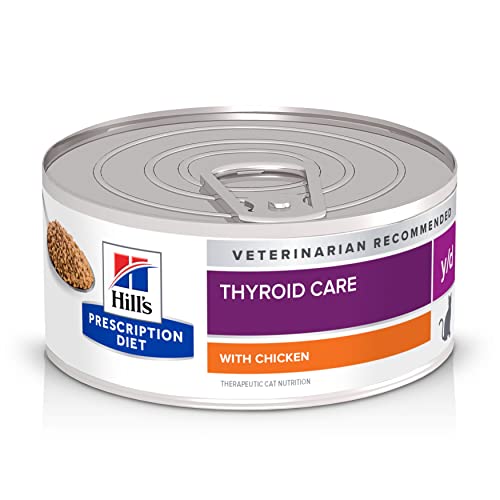
Hill's Prescription Diet Hill's Prescription Diet y/d Wet
Same thyroid-care formula in moisture-rich cans for hydration and dental ease

Fancy Feast Fancy Feast Senior 7+ Chicken Pate
High-moisture senior food for medically managed thyroid cats

Tiki Cat Tiki Cat Silver Senior Variety
High-protein wet recipes to rebuild muscle once thyroid levels are controlled

Pet Wellbeing Pet Wellbeing Thyroid Support Gold
Optional herbal wellness drops used alongside, never instead of, vet care

Hill's Science Diet Hill's Science Diet Senior 11+ Dry
Digestible everyday senior kibble for treated, stable thyroid cats
How We Chose These Options
We did not run a feeding trial. We compared each product on its formulation, its evidence base, AAFCO or therapeutic labeling, and palatability patterns from verified owner reviews. For the prescription category we leaned on the established iodine-restriction mechanism. For the medically managed category we prioritized moisture, named animal protein, and digestibility, since treated thyroid cats often have kidney concerns. We have flagged the supplement clearly as optional, because it is not a treatment.
Understand the Treatment Before the Food
Hyperthyroidism has four main treatments: methimazole medication, radioiodine therapy, surgical removal of the gland, and dietary iodine restriction. Only your veterinarian can decide which fits your cat, and that decision shapes the food choice entirely. If your cat is on an iodine-restricted diet, the food is the treatment. If your cat takes medication or has had radioiodine, the food is simply supportive senior nutrition. Picking food without knowing the plan is the most common mistake owners make.
Haven Pet Insurance for Senior Cats.Coverage for accidents, illness, and the chronic conditions that drive the biggest senior-cat vet bills (kidney disease, hyperthyroidism, diabetes). Get a fast, free quote using your cat’s breed, age, and zip, then see your monthly premium before you commit.Sponsored
The Prescription Route: Iodine-Restricted Food
Iodine-restricted therapeutic food works by starving the overactive gland of the iodine it needs to make hormone. Fed as the only food, it can bring thyroid levels back toward normal within a few weeks. The mechanism is real, but it is also fragile.
- Exclusivity is everything: No treats, no other cat foods, no flavored medications, no table scraps. A single source of extra iodine can blunt the effect.
- Multi-cat homes are hard: If other cats in the house eat normal food, keeping your thyroid cat on y/d alone takes separated feeding stations and discipline.
- Indoor only: A cat that hunts or scavenges outdoors will get iodine from prey and undo the diet.
- It is reversible: Stop the food and the thyroid ramps back up, so this is a lifelong commitment, not a course of treatment.
When those conditions are realistic, iodine-restricted feeding spares a cat daily pills and works well. When they are not, your vet will usually recommend medication or radioiodine instead.
The Medically Managed Route: Quality Senior Food
If your cat takes methimazole or has had radioiodine therapy, the thyroid is being handled separately, and you are free to choose a food that supports the rest of an aging body. Here the priorities flip toward moisture, digestibility, and muscle support. Many treated cats arrive underweight after months of burning through their reserves, so a calorie-dense, protein-rich, highly palatable food helps them recover lean mass. Wet food earns its place by adding the water that aging kidneys need, which matters because treatment can unmask hidden kidney disease.
The Hidden Link With Kidney Disease
Hyperthyroidism artificially boosts blood flow to the kidneys, which can hide early kidney disease on bloodwork. When treatment lowers thyroid hormone, that masking effect lifts and kidney values sometimes rise. This is not a reason to avoid treatment, since uncontrolled hyperthyroidism is hard on the heart and the whole body, but it is why your vet rechecks kidney values after starting therapy and may steer you toward a moisture-rich, phosphorus-controlled diet. Feeding wet food from the start gives those kidneys a head start.
Comparing the Choices
| Option | Role | Best for |
|---|---|---|
| Hill's y/d Dry | Treats the disease via iodine restriction | Indoor, single-diet cats fed exclusively |
| Hill's y/d Wet | Same treatment with added moisture | Thyroid cats also needing hydration |
| Fancy Feast Senior 7+ | Supportive senior nutrition | Medically managed cats needing moisture |
| Tiki Cat Silver Senior | High-protein muscle support | Treated, underweight cats rebuilding mass |
| Science Diet Senior 11+ | Everyday digestible kibble | Stable treated cats that prefer dry |
| Thyroid Support Gold | Optional wellness only | Use only alongside real treatment |
Hyperthyroid Cat Quick Links
- Hill's Prescription Diet y/d Dry - iodine-restricted thyroid care food
- Fancy Feast Senior 7+ Pate - moisture-rich food for treated cats
- Browse thyroid care cat foods on Amazon
The Bottom Line
The best food for a hyperthyroid cat depends entirely on the treatment plan. If your vet recommends dietary control, an iodine-restricted food like Hill's y/d can genuinely lower thyroid hormone, but only when it is the cat's exclusive food for life. If your cat is on medication or has had radioiodine, choose a moisture-rich, protein-supportive senior diet that also protects the kidneys. Either way, this is a partnership with your veterinarian, who should confirm the diagnosis, set the plan, and monitor bloodwork as you go.
Related Guides
- Best Prescription Diet for Senior Cats - Therapeutic diets for common senior diseases.
- Best Food for Cats With Kidney Disease - The renal link to watch with thyroid cats.
- Best High-Calorie Food for Senior Cats - Helping a thin, treated cat regain weight.
Senior Cat Wellness & Care Planner
Track your aging cat's health, meds, vet visits, mobility, nutrition, and quality of life, all in one printable planner.
Pet Insurance · Sponsored
Protect Your Senior Cat From Surprise Vet Bills
Older cats are more prone to kidney, dental, and thyroid trouble, and a single emergency visit can run into the hundreds or thousands. Pet insurance can help you say yes to the care your cat needs without draining your savings. Get a free quote and see what coverage fits.
Frequently Asked Questions
What is the best food for a cat with hyperthyroidism?
For cats managed by diet alone, the most established option is an iodine-restricted therapeutic food such as Hill's Prescription Diet y/d, which limits the iodine the thyroid needs to make hormone. It only works if it is the cat's sole food, with no treats or other diets. Many cats are instead managed with medication or radioiodine therapy, in which case a high-quality, moisture-rich senior food that supports kidney health is usually the better choice. Your veterinarian should guide which path fits your cat.
How does iodine-restricted food treat hyperthyroidism?
The thyroid gland uses dietary iodine to build thyroid hormone. By tightly limiting iodine, foods like Hill's y/d give the overactive gland less raw material, which lowers hormone production over a few weeks. It is a genuine treatment, not just supportive nutrition, but the restriction is the entire mechanism, so a single treat or a few bites of another food can undo it. Strict exclusivity is the hard part for most households.
Can I just feed senior cat food instead of a prescription diet?
Regular senior food does not treat hyperthyroidism, so it is only appropriate when the disease is controlled another way, usually methimazole medication or radioiodine therapy. In those cases a moisture-rich, highly digestible senior diet with named animal protein is a good fit, especially because treated hyperthyroid cats often have hidden kidney disease that benefits from extra water and controlled phosphorus. Never replace prescribed treatment with off-the-shelf food without your vet's sign-off.
Should hyperthyroid cats eat more protein?
Often yes, when kidney values allow it. Untreated hyperthyroidism burns through muscle, so many affected cats arrive thin despite a big appetite. Once the disease is controlled, good-quality animal protein helps rebuild lean mass. The caveat is kidney function: hyperthyroidism can mask underlying kidney disease, and treatment sometimes reveals it. Your vet may adjust protein and phosphorus based on bloodwork, so protein choices should follow lab results, not guesswork.
Are thyroid support supplements a substitute for treatment?
No. Herbal thyroid support products are not proven to control feline hyperthyroidism and should never replace methimazole, radioiodine, surgery, or a prescribed iodine-restricted diet. Some owners use them alongside veterinary care for general wellness, but the disease is progressive and damages the heart and kidneys when uncontrolled. Treat any supplement as optional comfort, not therapy, and tell your vet about anything you give so it does not interfere with monitoring.
Why does my hyperthyroid cat eat constantly but stay skinny?
Excess thyroid hormone revs the metabolism, so the body burns calories faster than the cat can eat, even with a ravenous appetite. The result is weight and muscle loss despite emptying the bowl. This classic pattern, a hungry but shrinking older cat, is one of the most recognizable signs of the disease. It usually reverses once treatment lowers hormone levels, and steady weight gain is a good sign therapy is working.
Can diet alone manage hyperthyroidism long term?
It can for some cats, but it demands perfect compliance. The iodine-restricted food must be the only thing the cat eats, indefinitely, with no treats, flavored medications, or stolen bites from housemates. That is hard in multi-cat homes or with cats who roam. When strict feeding is realistic and the cat eats it well, diet control can work for years. When it is not, medication or radioiodine is usually more reliable.
Need more help with your aging cat?
Browse our guides by topic to find practical solutions.
Wellness Planner: $39