How to Give a Cat a Pill: A Calm, Safe Guide
A practical, vet-informed guide to pilling a senior cat without a fight: pill pockets, pill poppers, the towel wrap, transdermal and compounded alternatives, and what never to do.
Few tasks rattle a devoted cat owner like giving a pill to a senior cat that has decided it wants no part of the plan. Older cats often take daily medication for kidney disease, hyperthyroidism, heart disease, or pain, so getting comfortable and confident with pilling can shape your whole experience of caring for a sick cat.
The good news is that with the right technique and a few inexpensive tools, most cats can be medicated calmly and quickly. This guide walks through the gentlest methods first, then the hands-on technique a veterinary nurse would teach, and finally the alternatives worth asking about when pills simply are not working. Always give only the medications your veterinarian has prescribed, at the dose and schedule they set. This article is educational and supports, not replaces, your vet's guidance.
Tools That Make Pilling Easier
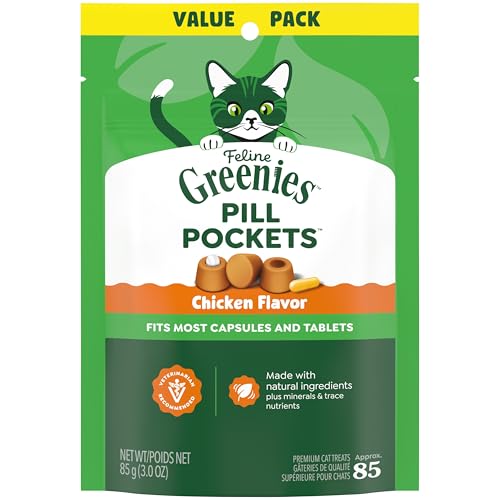
Greenies Greenies Feline Pill Pockets
The vet-recommended way to hide a tablet inside a tasty chicken treat

Knupp Co. Soft-Tip Pet Pill Shooter
Places a pill over the back of the tongue without using your fingers

Lixit Lixit Hand Feeding Syringe
Gives a small water chaser so the pill goes down safely

PureBites PureBites Freeze-Dried Chicken Treats
A high-value chaser to reward and reset after dosing
Start With the Gentlest Method
Whenever your veterinarian confirms it is safe, hide the pill rather than fight for it. Cats remember bad experiences, and a single rough session can make every future dose harder. The hidden-pill approach protects both your cat's trust and your own peace of mind.
- Pill pockets: A soft, moldable treat with a hollow center. Drop in the tablet, pinch it closed, and offer it as a treat. For a suspicious cat, give one or two empty pockets first so the loaded one does not stand out.
- A favorite food: A pea-sized amount of a strong-smelling food such as a lickable broth treat, a dab of cat-safe pate, or a small meatball of canned food can carry a pill. Use only a tiny portion so your cat finishes it in one bite.
- Crushing, only if approved: Some tablets can be crushed and stirred into a teaspoon of wet food. Many cannot. Always confirm with your vet before crushing, because extended-release and enteric-coated drugs must stay whole.
The Hands-On Technique
When a pill must go in directly, a calm, practiced method beats a frantic one every time. Set up on a non-slip surface at a comfortable height, and have your chaser ready before you start.
- Restrain gently. Many cats do best wrapped snugly in a towel with only the head exposed, which keeps the front claws contained without force.
- Tip the head up. Hold the top of the head from above, with your thumb and fingers behind the cheekbones. Tilt the nose toward the ceiling. The lower jaw will naturally relax open.
- Place the pill. With your other hand, use a pill popper or a fingertip to set the pill over the back of the tongue, past the hump. Aiming far back triggers a swallow rather than a spit.
- Close and stroke. Close the mouth, lower the head to a natural position, and gently stroke the throat or blow softly on the nose to prompt swallowing.
- Give the chaser. Follow immediately with a few milliliters of water from a syringe or a lick of food.
A pill popper, sometimes called a pill gun, is worth its low cost. The soft silicone tip places the pill exactly where it needs to go and keeps your fingers away from teeth. For cats that bite, it can turn a dreaded task into a two-second one.
Backup Options for Picky or Wary Cats

BVQWO 2-in-1 Pill Popper for Cats
Soft-tipped piller that doubles as a small liquid syringe
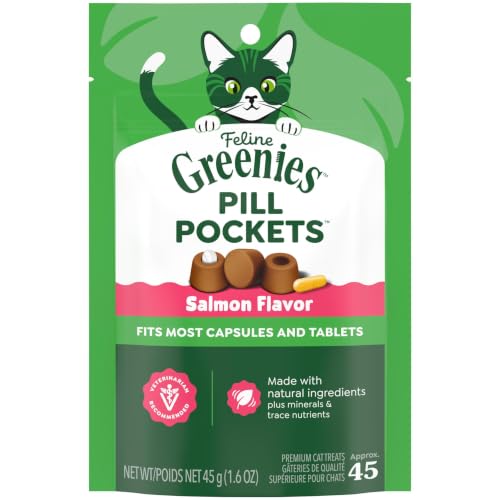
Greenies Greenies Pill Pockets, Salmon
A second flavor to rotate so a clever cat does not catch on

Delectables Delectables Savory Broths
A lickable, low-volume treat that hides a crushed or whole pill
Always Use a Chaser
This single step prevents a real and underappreciated problem. A dry-pilled cat, meaning one given a tablet with nothing to wash it down, can have the pill lodge partway down the esophagus. Some medications, including doxycycline and clindamycin, irritate that lining and in rare cases cause scarring that narrows the tube. Following every direct pill with a few milliliters of water or a lick of wet food carries the tablet safely into the stomach. Never skip the chaser to save time.
When Pills Are Not Working: Better Alternatives
If pilling has become a daily battle that leaves your cat hiding and you dreading it, do not just push harder. Talk to your veterinarian about a different delivery method. Senior cats are sensitive to stress, and a frightened cat eats less, which can undo the very treatment you are trying to give.
- Transdermal medication: Some drugs, most notably methimazole for hyperthyroidism, can be compounded into a gel you rub onto the hairless inside of the ear. No pill, no mouth, no fight.
- Compounded flavored liquids: A compounding pharmacy can turn many medications into a fish or chicken-flavored suspension dosed by syringe.
- Long-acting injections: For certain conditions, your vet can give an injection at the clinic that lasts days or weeks, removing daily dosing entirely.
- A different formulation: Sometimes the same drug comes as a smaller tablet, a chewable, or an alternative that your cat tolerates better.
What Never to Do
A few habits do real harm and are worth avoiding entirely.
- Never give a human medication on your own. Many common drugs, including acetaminophen, ibuprofen, and aspirin, are toxic or fatal to cats. Give only what your vet prescribes.
- Never dry-pill without a chaser, for the esophageal reasons above.
- Never blow hard into the face or hold the mouth shut at length, which frightens the cat and risks aspiration.
- Never crush extended-release or enteric-coated tablets without your vet's approval.
- Never punish or scold a resisting cat. Calm, quick, and rewarded is the goal every time.
Senior Cat Wellness & Care Planner
Track your aging cat's health, meds, vet visits, mobility, nutrition, and quality of life, all in one printable planner.
Build a Routine Your Cat Can Predict
Cats settle into predictable rituals. Dose at the same time and place each day, keep sessions short, and finish with a genuine reward such as a favorite freeze-dried treat or a few minutes of attention. Over time many cats stop resisting entirely, especially when the pill arrives wrapped in something delicious. The aim is not just to get the medication in today, but to make tomorrow easier too.
If you are caring for a senior cat with a chronic illness, mastering this skill genuinely improves their care. When a method stops working, reach out to your veterinary team early. They would far rather adjust the plan than have a cat miss doses, and they have likely seen every trick your clever cat can invent.
Related Guides
- How to Syringe Feed a Cat - For when appetite drops during illness.
- Hyperthyroidism in Senior Cats - Where transdermal methimazole often helps.
- Reducing Vet Visit Stress for Your Cat - Low-stress handling that carries over to home dosing.
Pet Insurance · Sponsored
Protect Your Senior Cat From Surprise Vet Bills
Older cats are more prone to kidney, dental, and thyroid trouble, and a single emergency visit can run into the hundreds or thousands. Pet insurance can help you say yes to the care your cat needs without draining your savings. Get a free quote and see what coverage fits.
Frequently Asked Questions
What is the easiest way to pill a senior cat?
For most cats the easiest route is hiding the pill, not forcing it. A soft pill pocket molded around the tablet, a dab of the pill in a small amount of a strong-smelling favorite like a lickable treat, or your veterinarian compounding the drug into a flavored liquid all avoid a wrestling match. If the medication must go in by hand, a pill popper paired with a chaser of water or food makes direct dosing faster and far less stressful than fingers alone.
Can I crush my cat's pill and mix it in food?
Sometimes, but ask your veterinarian first. Many tablets can be crushed and mixed into a teaspoon of wet food, but some must stay intact. Enteric-coated, extended-release, and certain bitter drugs lose effectiveness or taste terrible when crushed, and a cat that detects the bitterness may refuse the whole meal and skip its dose. Never crush a capsule meant to be swallowed whole, and never assume a medication is safe to alter without checking.
How do I give a pill without getting bitten or scratched?
Work calmly on a non-slip surface at table height, or wrap your cat snugly in a towel like a burrito with only the head out. Approach from above and behind rather than face on. Hold the head gently, tip the nose toward the ceiling so the lower jaw drops, place or shoot the pill over the back of the tongue, then close the mouth and stroke the throat. A short water or food chaser helps the pill go down and protects the throat.
What if my cat absolutely refuses pills?
You have good alternatives. Ask your veterinarian about a transdermal version applied to the inner ear, a compounded flavored liquid, a long-acting injection given at the clinic, or in some cases a different drug in an easier form. Methimazole for hyperthyroidism, for example, is commonly available as a transdermal gel. Forcing pills on a fearful cat day after day damages your bond and your cat's appetite, so it is worth finding a kinder option.
Why does my cat foam at the mouth after a pill?
Drooling or foaming usually means the cat tasted the medication, which is common with bitter drugs that dissolve on the tongue. It is unpleasant but rarely dangerous, and it often settles within a few minutes. Offering a small chaser of water or a lick of food right after dosing helps wash the taste away. If foaming is heavy, repeated, or comes with retching or distress, stop and call your veterinarian to discuss a better-tasting formulation.
Should I always give water after a pill?
Yes, a small chaser is one of the most important steps. Dry-pilling a cat, meaning giving a tablet with nothing to wash it down, can leave the pill stuck in the esophagus, where some drugs cause irritation or even strictures over time. Follow every direct pill with a few milliliters of water from a syringe, a lick of wet food, or a treat. This pushes the pill safely into the stomach and protects the delicate esophageal lining.
Is it safe to use pill pockets every day for medication?
For most cats, yes. Pill pockets are designed as daily treats and are the vet-recommended way to hide routine medication. Account for the few extra calories if your cat is on a strict diet, and check with your veterinarian if your cat has food allergies or a prescription diet, since some pockets contain chicken or other proteins. Rotating flavors and occasionally giving an empty pocket as a plain treat keeps a clever cat from learning to spit the pill out.
Need more help with your aging cat?
Browse our guides by topic to find practical solutions.
Wellness Planner: $39