Best Cat Water Fountains for Senior Cats 2026
Compare 5 stainless steel cat water fountains for senior cats. Hydration for kidney health, quiet pumps, easy cleaning, and how to pick the right fountain for an older cat.
Hydration is quietly one of the biggest levers in senior cat health. Aging cats are prone to chronic kidney disease and urinary problems, and many simply do not drink enough from a still bowl. Cats are wired to favor moving water, which they read as fresher, so a good fountain can meaningfully increase how much an older cat drinks across the day. That extra intake supports the kidneys and urinary tract, the two systems most likely to give trouble as a cat ages.
We compared popular stainless steel cat fountains using published specifications, materials and pump details, filtration design, and the recurring themes in verified owner reviews. We focused on stainless models because they are easier to keep genuinely clean than plastic, which matters for seniors with weaker immune systems. Below are five we recommend, a comparison table, and guidance for picking and maintaining the right one.
Best Cat Water Fountains for Senior Cats 2026

Veken Stainless Steel Fountain, 108oz
Award-winning 3.2L stainless fountain with six replacement filters and a silicone mat, great for multi-cat homes.
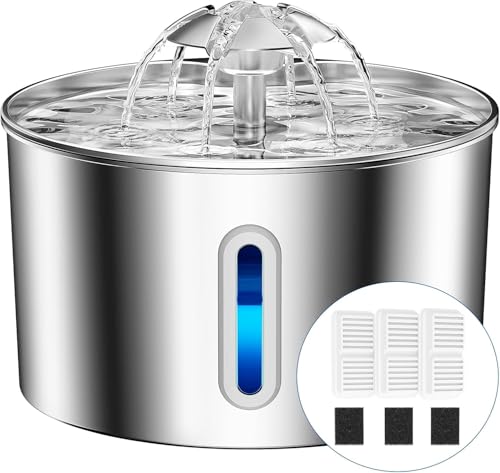
BalimoPet Stainless Steel Fountain, 74oz
Compact 2.2L stainless fountain with three filters and no-spill design for a single senior cat.

Neareal Stainless Steel Fountain, 73oz
2.2L all-stainless basin for easy weekly cleaning and fresh, moving water indoors.

ATMZIQXR Quiet Stainless Fountain, 88oz
2.6L stainless fountain tuned for quiet operation, good for sound-sensitive senior cats.

APAUK Silent Stainless Fountain, 108oz
3.2L silent stainless fountain with a soft light and two filters and sponges, large capacity.
How Do These Cat Fountains Compare?
| Fountain | Price | Capacity | Material | Best For |
|---|---|---|---|---|
| Veken 108oz | $38 | 3.2L | Stainless steel | Multi-cat homes, fewer refills |
| BalimoPet 74oz | $17 | 2.2L | Stainless steel | Single cat, budget pick |
| Neareal 73oz | $20 | 2.2L | Stainless steel | Easy cleaning, single cat |
| ATMZIQXR 88oz | $20 | 2.6L | Stainless steel | Quiet operation, shy cats |
| APAUK 108oz | $18 | 3.2L | Stainless steel | Large capacity on a budget |
How We Picked These Fountains
We did not run a hands-on test lab. Instead we compared manufacturer specifications, basin and pump materials, filtration design, capacity, and the consistent patterns in verified owner reviews, then judged them against what supports hydration and hygiene for older cats. We weighted three factors most heavily. First, stainless steel construction, because a non-porous basin is dramatically easier to keep free of the biofilm that can harbor bacteria, which matters for immune-compromised seniors. Second, quiet operation, since a noisy pump can drive a sound-sensitive older cat away. Third, sensible capacity and easy disassembly, so the fountain gets cleaned often rather than left to go stale. Price and filter availability rounded out the picture.
A Closer Look at Each Fountain
Veken Stainless Steel Fountain, 108oz
Our top overall pick balances generous 3.2 liter capacity with an all-stainless basin and a bundle of six replacement filters, which keeps running costs low for the first several months. The large reservoir means a single senior cat needs refills only every few days, and it comfortably serves multi-cat households. A non-slip silicone mat catches drips around the base. As with any fountain, keep the water topped up to avoid pump noise, and stick to the filter-change schedule to keep the water fresh.
Pros: Large capacity, stainless basin, six filters included, drip mat.
Cons: Bigger footprint; the size encourages less frequent cleaning if you are not disciplined.
BalimoPet Stainless Steel Fountain, 74oz
For a single senior cat on a budget, this compact 2.2 liter stainless fountain covers the essentials at the lowest price in our group. The no-spill design keeps the floor dry, and the smaller basin is quick to rinse and refill, which encourages the frequent cleaning seniors benefit from. It ships with three filters to get you started. The trade-off is capacity, so plan on more frequent top-ups if you have more than one cat.
Pros: Very affordable, easy to clean, no-spill design, stainless basin.
Cons: Smaller capacity; needs more frequent refilling in multi-cat homes.
Neareal Stainless Steel Fountain, 73oz
This 2.2 liter all-stainless fountain leans into simplicity and hygiene. With fewer crevices than fussier designs, the basin wipes clean quickly during the weekly wash, which is exactly what you want for a senior cat's water source. The moving stream draws hesitant drinkers, and the modest size suits a single cat or a quieter two-cat home. It is a no-frills, easy-maintenance option that does the core job well.
Pros: Easy to disassemble and clean, durable stainless, encourages drinking.
Cons: Basic feature set; smaller reservoir.
ATMZIQXR Quiet Stainless Fountain, 88oz
If you share a small space with your cat or your senior spooks at sound, this 2.6 liter fountain is tuned for quiet running. The mid-size capacity strikes a balance between refill frequency and footprint, and the stainless basin keeps cleaning manageable. Quiet operation still depends on keeping the water level up, so top it off before it runs low. It is a sensible pick for nervous older cats who shy away from bubbling fountains.
Pros: Quiet pump, mid-size capacity, stainless basin, good for shy cats.
Cons: Lesser-known brand; filter availability worth checking before buying.
APAUK Silent Stainless Fountain, 108oz
This 3.2 liter silent fountain offers large-capacity convenience at a budget price, with a soft optional light that can help a senior find water at night, useful for cats whose vision or cognition has declined. It includes two filters and sponges to start. The big reservoir reduces refills, though as with all large fountains, stay on top of weekly cleaning so the water does not sit too long. A strong value for owners who want capacity without spending much.
Pros: Large capacity, quiet, optional night light, low price.
Cons: Fewer starter filters; light may not suit every cat.
Getting the Most From a Cat Fountain
- Keep it topped up. A low water level is the number one cause of pump noise and a cat avoiding the fountain.
- Clean on a schedule. Rinse every couple of days, deep-clean weekly including the pump, and change filters on time.
- Place it thoughtfully. Set the fountain away from the litter box and ideally apart from the food bowl, which many cats prefer.
- Ease the transition. Keep a familiar bowl available at first and let your cat investigate the fountain at their own pace.
- Pair with wet food. Fountains plus moisture-rich food give the best total hydration for a kidney-prone senior.
A fountain supports hydration, but it does not replace veterinary care. If your senior cat is drinking much more than usual, urinating more, or losing weight, see your veterinarian, since these can be signs of kidney disease, diabetes, or hyperthyroidism. This guide is educational and complements professional care.
Senior Cat Wellness & Care Planner
Track your aging cat's health, meds, vet visits, mobility, nutrition, and quality of life, all in one printable planner.
Related Senior Cat Guides
Pet Insurance · Sponsored
Protect Your Senior Cat From Surprise Vet Bills
Older cats are more prone to kidney, dental, and thyroid trouble, and a single emergency visit can run into the hundreds or thousands. Pet insurance can help you say yes to the care your cat needs without draining your savings. Get a free quote and see what coverage fits.
Frequently Asked Questions
Why are water fountains good for senior cats?
Older cats are prone to chronic dehydration, kidney disease, and urinary problems, and many simply do not drink enough from a still bowl. Cats instinctively prefer moving water, which they often perceive as fresher and safer, so a fountain encourages more frequent drinking throughout the day. Better hydration supports kidney function and urinary health, two of the most common concerns in aging cats. A fountain is not a treatment for kidney disease, but it is a simple way to help a senior cat take in more water than they otherwise would.
Are stainless steel fountains better than plastic?
For most senior cats, yes. Stainless steel is non-porous, resists the biofilm and scratches that harbor bacteria in plastic, and is far easier to keep truly clean. Some cats develop chin acne or skin irritation from plastic bowls, and stainless avoids that. Stainless basins also tend to be more durable and do not retain odors. Plastic fountains can work and cost less, but they require more diligent cleaning. Ceramic is another good non-porous option, though it is heavier and can chip.
How often should I clean a cat water fountain?
Rinse and refill every one to three days, do a thorough wash of the basin and pump weekly, and replace the carbon filter according to the manufacturer's schedule, usually every two to four weeks. Senior cats with weaker immune systems are more vulnerable to bacteria, so do not let slime build up inside the basin or pump housing. A small brush set helps you reach the pump's internal channels, which are the spot most owners forget and where buildup tends to start.
Are cat fountains too noisy for an older cat?
Quality fountains run quietly, but noise depends on water level and pump condition. The most common cause of a loud fountain is a low water level, which makes the pump strain and gurgle, so keep it topped up. Choosing a model with a submersible pump and a gentle flow setting helps. Some seniors are sound-sensitive, so place the fountain away from their food and litter and give them a few days to adjust. If a cat avoids a noisy fountain, lowering the flow or refilling usually solves it.
What size fountain should I get?
Capacity should match how many cats you have and how often you want to refill. For a single senior cat, a 1.5 to 2 liter fountain is usually plenty and refilling every couple of days keeps the water fresh. Multi-cat homes benefit from larger 3 liter or more capacities so the pump never runs dry between fills. Larger reservoirs mean less frequent refilling, but they still need regular cleaning, so do not size up so much that the water sits stale.
My senior cat ignores the fountain. What can I do?
Introduce it gradually and keep the old water bowl available at first so your cat is not forced to switch. Place the fountain in a quiet, familiar spot away from the litter box and food. Some cats prefer a gentle stream over a bubbling fountain, so try the lowest flow setting. Make sure it is spotlessly clean, since cats avoid water that smells off. Patience usually wins, but if your cat still will not drink enough, talk with your vet about other ways to boost hydration, such as wet food.
Need more help with your aging cat?
Browse our guides by topic to find practical solutions.
Wellness Planner: $39