Vision Loss in Senior Cats: Signs & Support
Cats hide failing eyesight well. Learn the subtle signs of vision loss in senior cats, why sudden blindness is an emergency, the common eye conditions of old age, and how to help a blind cat thrive.
Cats are so good at compensating for failing eyesight that many go blind without their owners realizing anything is wrong. Relying on memory, whiskers, hearing, and an exquisite sense of smell, a cat can navigate a familiar home with such confidence that vision loss stays hidden until something disrupts the routine, like rearranged furniture or a move to a new house.
That hidden quality makes it important to know the subtle signs, because some causes of vision loss are emergencies and others are early warnings of body-wide disease. This guide explains how to spot failing vision, what is behind it in older cats, and how to help a visually impaired cat continue to live a full, happy life. It is educational and meant to support, not replace, your veterinarian's care.
Support Picks for a Cat with Vision Loss

AUVON Motion Sensor Night Light
Soft light helps a cat with partial vision navigate after dark
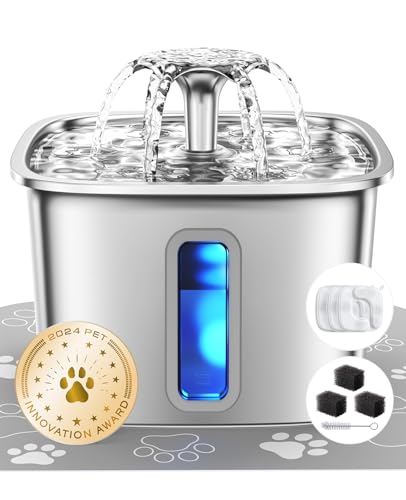
Veken Stainless Steel Cat Water Fountain
The steady sound of flowing water helps a blind cat locate its drink

NE14pets Low-Entry Senior Litter Box
Easy, predictable access for a cat that navigates by feel

Necoichi Raised Tilted Cat Food Bowl
A fixed, raised feeding station a blind cat can return to reliably
The Subtle Signs of Failing Vision
Because cats lean so heavily on their other senses, vision loss reveals itself in small behavioral changes rather than obvious clumsiness. Watch for these clues, particularly if several appear together.
- Bumping into things: Especially objects that have been moved, since the cat's mental map no longer matches reality.
- Hesitating at jumps and stairs: A formerly confident cat that now pauses, misjudges, or stops leaping onto favorite perches.
- Startling easily: Reacting with alarm when you approach because it did not see you coming.
- Walking low and cautiously: Moving slowly with the body close to the ground, whiskers forward, feeling the way.
- Dilated pupils: Pupils that stay wide and do not shrink in bright light.
- Cloudy or changed eyes: A hazy, reddened, or differently shaped eye.
Sudden Blindness Is an Emergency
There is one scenario that demands immediate action. A cat that becomes blind suddenly, going from normal to disoriented, clingy, and bumping into walls within a day, is a medical emergency. The most common cause in older cats is high blood pressure, which damages the retina and can cause it to bleed or detach in a matter of hours.
What makes this so important is twofold. First, hypertension is usually secondary to kidney disease or hyperthyroidism, so sudden blindness is often the first visible sign of one of those diseases. Second, if the high pressure is treated quickly enough, some vision can occasionally be saved. A suddenly blind cat should see a veterinarian right away, not next week.
Senior Cat Wellness & Care Planner
Track your aging cat's health, meds, vet visits, mobility, nutrition, and quality of life, all in one printable planner.
Common Eye Conditions in Older Cats
Several conditions can rob a senior cat of sight, and many tie back to whole-body health, which is why an eye problem often leads to broader testing.
| Condition | What to Know |
|---|---|
| Hypertensive retinopathy | Retinal damage from high blood pressure, the top cause of sudden blindness |
| Retinal degeneration | Gradual, painless loss of the light-sensing cells over time |
| Glaucoma | Painful pressure buildup, with a cloudy, enlarged, or squinting eye |
| Uveitis | Inflammation inside the eye, often linked to infections or other disease |
| Cataracts | Clouding of the lens, less common in cats than in dogs |
Because so many of these connect to conditions like kidney disease, hyperthyroidism, and certain infections, your veterinarian may recommend bloodwork and a blood pressure check alongside the eye exam.
Helping a Blind Cat Thrive
Here is the genuinely reassuring part: cats adapt to blindness remarkably well, especially when it comes on gradually. With a few thoughtful adjustments, a blind cat can play, cuddle, and move around with real confidence. The guiding principle is consistency.
- Keep things in place: Leave furniture, beds, food, water, and litter boxes exactly where they are so your cat's mental map stays accurate. Avoid rearranging rooms.
- Remove hazards: Block off open staircases, balconies, and pools, and keep your cat safely indoors.
- Talk before you touch: Announce yourself with your voice so you do not startle a cat that cannot see you approach.
- Use scent and sound: Fountains, ticking clocks, textured rugs, and scented landmarks help a cat orient itself.
- Light the way for partial vision: Night lights assist cats that still have some sight in dim conditions.
- Keep paths clear: Pick up clutter and trim claws so your cat does not snag or stumble.
A Good Life Without Perfect Sight
Vision is just one of a cat's senses, and far from its most important. A blind or visually impaired cat that lives in a stable, loving home routinely surprises owners with how normally it behaves, finding its favorite sunny spot, greeting you at the door, and settling into your lap as it always did.
The most valuable things you can do are to act fast on any sudden change, since that can be an emergency, and to provide the calm, consistent environment in which a blind cat flourishes. With your support, vision loss becomes an adjustment rather than a tragedy, and your cat can enjoy many more contented years.
Related Guides
- Hypertension in Senior Cats - The leading cause of sudden feline blindness.
- Kidney Disease in Senior Cats - Often the disease underlying high blood pressure.
- Cognitive Dysfunction in Senior Cats - Another cause of disorientation in older cats.
Pet Insurance · Sponsored
Protect Your Senior Cat From Surprise Vet Bills
Older cats are more prone to kidney, dental, and thyroid trouble, and a single emergency visit can run into the hundreds or thousands. Pet insurance can help you say yes to the care your cat needs without draining your savings. Get a free quote and see what coverage fits.
Frequently Asked Questions
How can I tell if my senior cat is losing its vision?
Cats hide vision loss astonishingly well by relying on memory, whiskers, hearing, and smell, so signs are subtle. Watch for bumping into furniture, especially when things are moved, hesitating at stairs or jumps, missing when leaping, startling easily, walking low to the ground, or widely dilated pupils that do not shrink in bright light. Sudden blindness shows up as a cat that is abruptly disoriented and clingy. Any of these warrants a prompt veterinary eye exam.
What causes sudden blindness in cats?
The most common cause of sudden blindness in older cats is high blood pressure, which damages the retina and can cause it to bleed or detach, often within hours. Because hypertension itself is usually secondary to kidney disease or hyperthyroidism, sudden blindness is frequently the first visible sign of one of those diseases. This is a true emergency: if treated quickly, some vision can occasionally be restored, so a suddenly blind cat needs immediate veterinary care.
Can cats adjust to going blind?
Remarkably well, especially when vision is lost gradually. Cats navigate largely by memory, smell, hearing, and their sensitive whiskers, so a blind cat in a familiar, stable home often moves around with surprising confidence. The keys are keeping furniture, food, water, and litter boxes in fixed places, avoiding rearranging rooms, and using your voice to announce your presence. Most blind cats continue to play, cuddle, and enjoy a good quality of life.
How do I help a blind cat get around the house?
Consistency is everything. Keep furniture, bowls, beds, and litter boxes in the same spots so your cat can rely on its mental map. Block off hazards like open staircases, balconies, and pools, and keep the cat indoors. Use scent and sound cues, talk before you touch so you do not startle them, and add textured rugs as landmarks. Night lights help cats with partial vision, and keeping claws trimmed and pathways clear prevents injuries.
Is vision loss painful for cats?
Vision loss itself is usually not painful, but some of its causes are. Glaucoma, a buildup of pressure inside the eye, is genuinely painful and can cause squinting, a cloudy or enlarged eye, and tearing. Some tumors and severe inflammation also hurt. Conditions like high blood pressure and gradual retinal degeneration tend to be painless. Because a few causes are painful and some are emergencies, any change in your cat's eyes or vision should be examined by a veterinarian.
What eye problems are common in older cats?
Hypertensive retinopathy from high blood pressure is the big one in seniors and the leading cause of sudden blindness. Other conditions include gradual retinal degeneration, glaucoma, cataracts, which are less common in cats than dogs, chronic inflammation inside the eye called uveitis, and tumors. Many of these connect to body-wide diseases like kidney disease, hyperthyroidism, and certain infections, which is why an eye problem often prompts a broader health workup.
Should a blind cat go outside?
No. A cat that has lost its vision should be kept safely indoors, where you can control the environment and remove hazards. Outdoors, a blind cat cannot see traffic, predators, or other dangers and is at serious risk. Indoor life with consistent furniture placement, blocked-off hazards, and plenty of scent and sound enrichment keeps a blind cat both safe and happy. Supervised time in a secure, enclosed catio is a reasonable alternative for fresh air.
Need more help with your aging cat?
Browse our guides by topic to find practical solutions.
Wellness Planner: $39